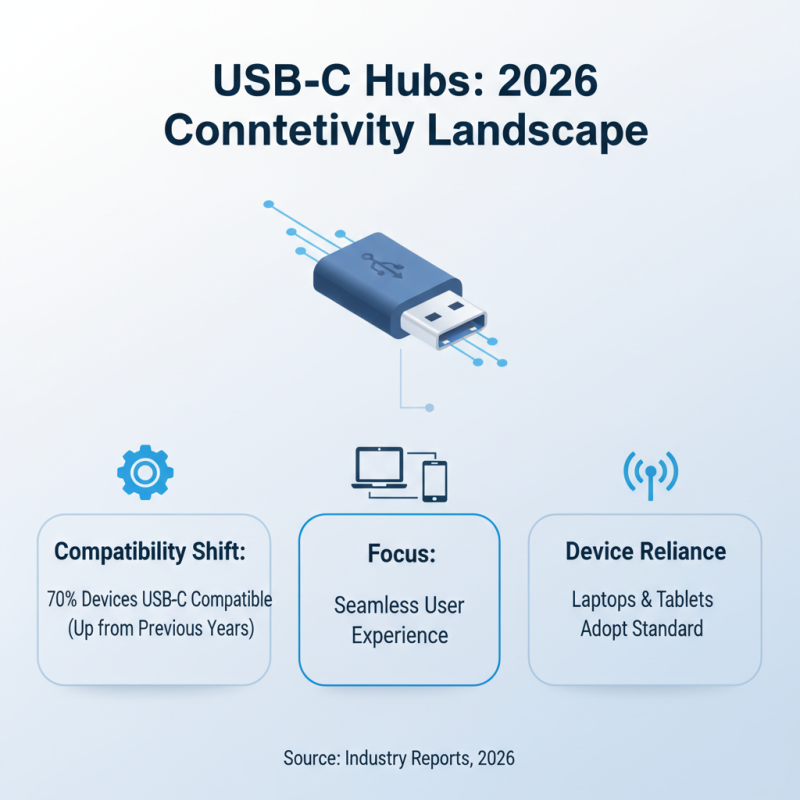
Top Type C Hubs in 2026 What You Need to Know
In the ever-evolving tech landscape of 2026, Type C Hubs have become essential tools. These devices streamline connectivity for laptops, tablets, and smartphones. With various ports available, they enhance usability. Users can connect multiple peripherals effortlessly.
Today’s Type C Hubs feature advanced technology. They support high-speed data transfer and efficient power delivery. However, not all hubs are created equal. Some fall short in compatibility or energy efficiency. It's crucial to research options before purchasing.
As we navigate this tech-driven world, the right Type C Hub can make a significant difference. However, choosing one can be tricky. Keep in mind the evolving trends, and always look for user reviews. A well-informed decision is vital in ensuring you stay connected without interruptions.
Top Trends in Type C Hubs for 2026
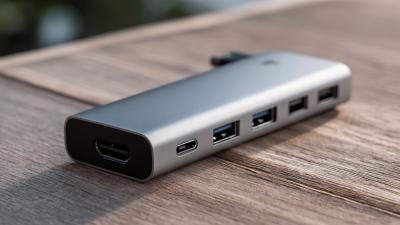
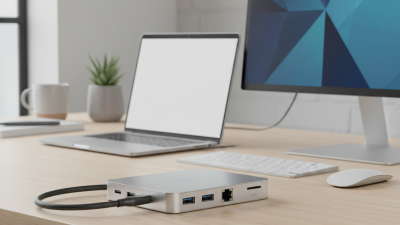
The landscape of Type C hubs is evolving rapidly in 2026. This year sees a shift towards multi-functionality. Users seek hubs that offer more than just basic connectivity. The ability to connect multiple devices seamlessly is crucial. Many hubs now feature integrated card readers and HDMI outputs. This versatility makes them suitable for various environments.
Power delivery is another significant trend. Consumers demand hubs that can charge devices quickly while maintaining strong data transfer rates. A hub that achieves this can elevate user experience dramatically. However, while many products promise fast charging, real-world performance often falls short. Users should remain cautious and do thorough research before making a purchase.
Moreover, portability is becoming essential. Professionals on the go require lightweight and compact solutions. Hubs are shrinking without sacrificing connectivity options. Yet, the balance between size and functionality isn’t always perfect. Some compact models may lack essential ports, leading to frustrative moments. Finding a hub that meets all needs can be challenging, prompting reflection on personal usage habits and whether the compromises are worthwhile.
Key Features to Look for in Type C Hubs
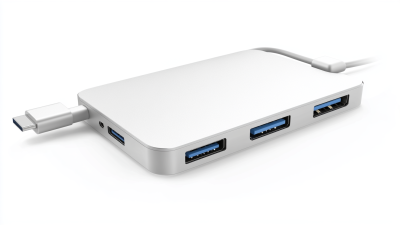
When choosing Type C hubs in 2026, certain features stand out as essential. One of the most critical aspects is the number of ports. A good hub should offer multiple USB-C and USB-A ports, ideally 3-4 of each, to accommodate various devices simultaneously. According to a recent industry report, hubs with at least five ports are increasingly favored by users, enhancing connectivity for workstations and gaming setups.
Power delivery is another vital feature. Many users now seek hubs that can provide power to their devices while transferring data. A hub supporting at least 60W power delivery is essential for most laptops. Hubs that support higher wattages are becoming more common, facilitating faster charging for power-hungry devices.
Tips: Look for a hub with built-in heat management. Overheating can lead to reduced performance and device damage. Additionally, consider one with a durable design. Fragile plastic housings can break easily under daily usage.
Lastly, support for HDMI or DisplayPort is crucial for those needing to connect to monitors. Many users often overlook this feature. Ensure the hub supports at least 4K video output. This will prevent issues with screen resolution and clarity. Remember, choosing the right hub can boost productivity significantly.
Best Brands and Models of Type C Hubs in 2026
In 2026, selecting the right Type C hub can significantly enhance productivity. The market expects a continuous rise in demand, with projections indicating a growth rate of about 10% annually. This surge aligns with the increasing number of devices supporting USB Type C technology. Professionals need devices with excellent compatibility and performance.
When exploring Type C hubs, focus on features like charging capability and data transfer speed. Many models offer PD (Power Delivery) support, allowing for quicker device charging. Look for hubs that support USB 3.2 or newer to benefit from faster data transfer rates. Reports suggest that users prioritize efficiency in their tech accessories, making these features vital.
Tip: Before buying, check for user reviews and ratings. Performance may vary by model, and understanding real user experiences can guide choices. Another aspect to consider is the design. Some hubs may not be as portable as expected. Think about your on-the-go needs. A bulky hub can hinder mobility and convenience.
Price Range and Value Comparisons for Type C Hubs
When exploring Type C hubs in 2026, it's essential to consider their price range and value. Prices vary widely, reflecting the functionality and features offered. Basic hubs may start around $20, while high-end models can exceed $100. Understanding what you need will help avoid overspending on unnecessary features.
Ensure you assess the ports available. Some hubs offer various options, such as HDMI, USB-A, Ethernet, and card readers. Evaluate your devices to find the best match. Compatibility is crucial, as some hubs work better with specific devices or systems. Reading user reviews can reveal the flaws others have encountered.
Tip: Always compare specifications. A hub may look appealing but under-deliver in power output or data transfer speed. An extra investment for a high-quality hub can save future headaches. Reflection on your needs is vital. Avoid buying on impulse. Think about your daily tasks. Would you use all the features? If not, it might be wise to choose a simpler model.

 USB C Docking & Hub
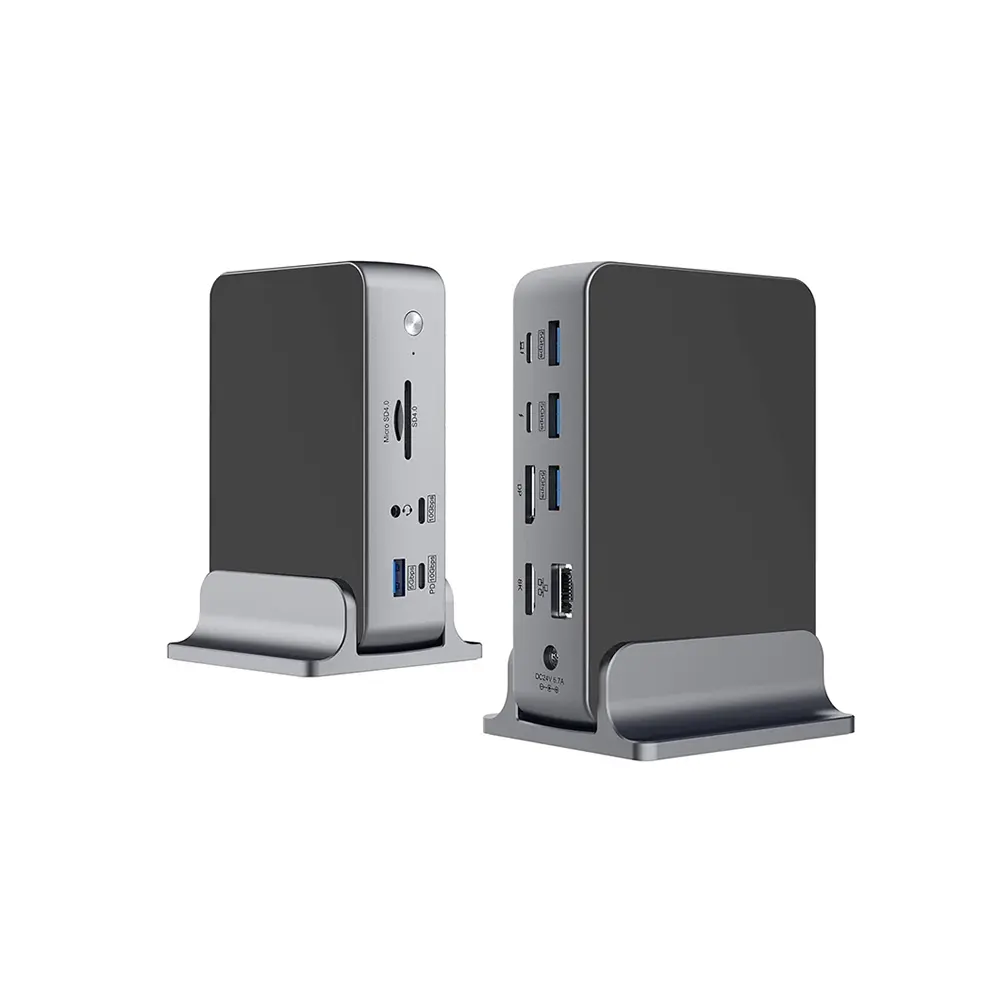 USB C Docking Station
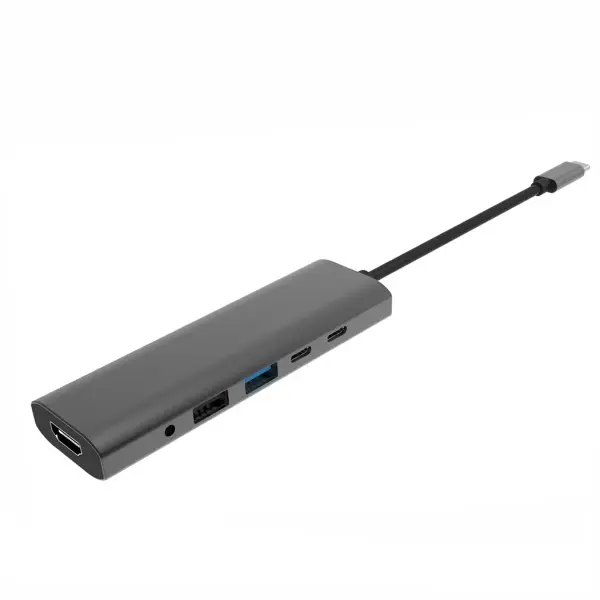 USB C Hub-H Series
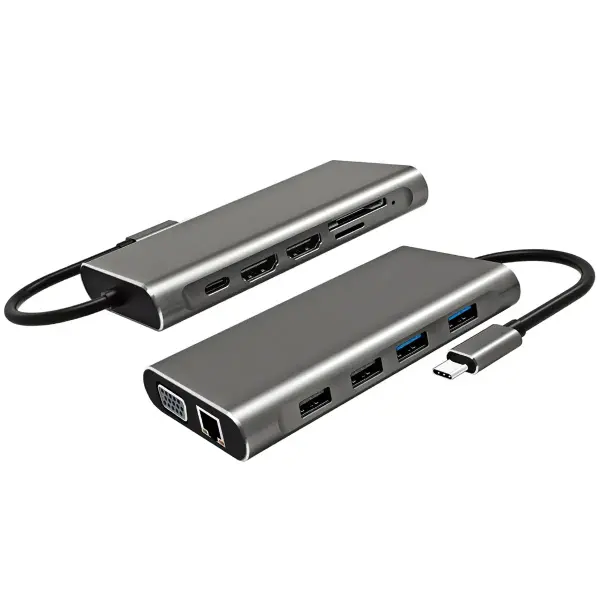 USB C Hub-H Series High End
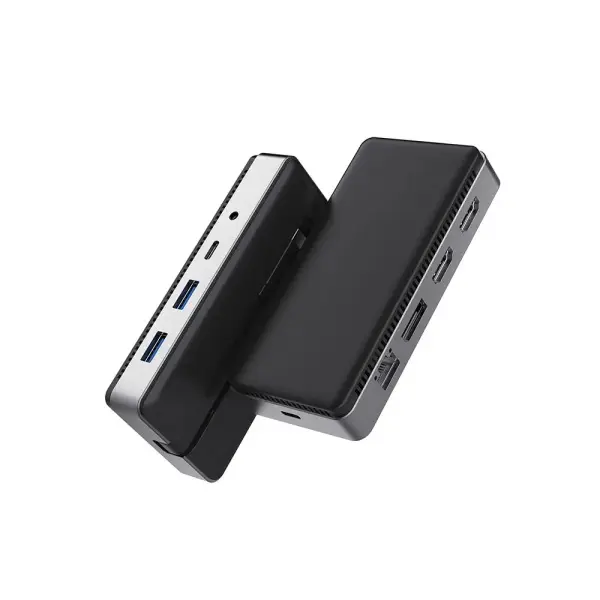 USB C Hub-X Series High End
 HDMI Cable
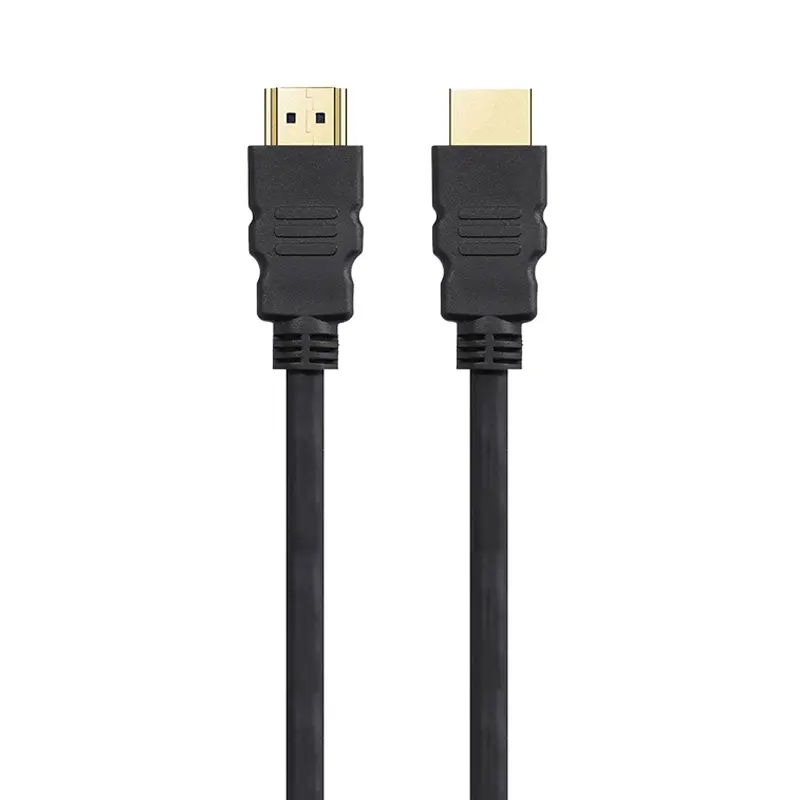 4K HDMI Cable
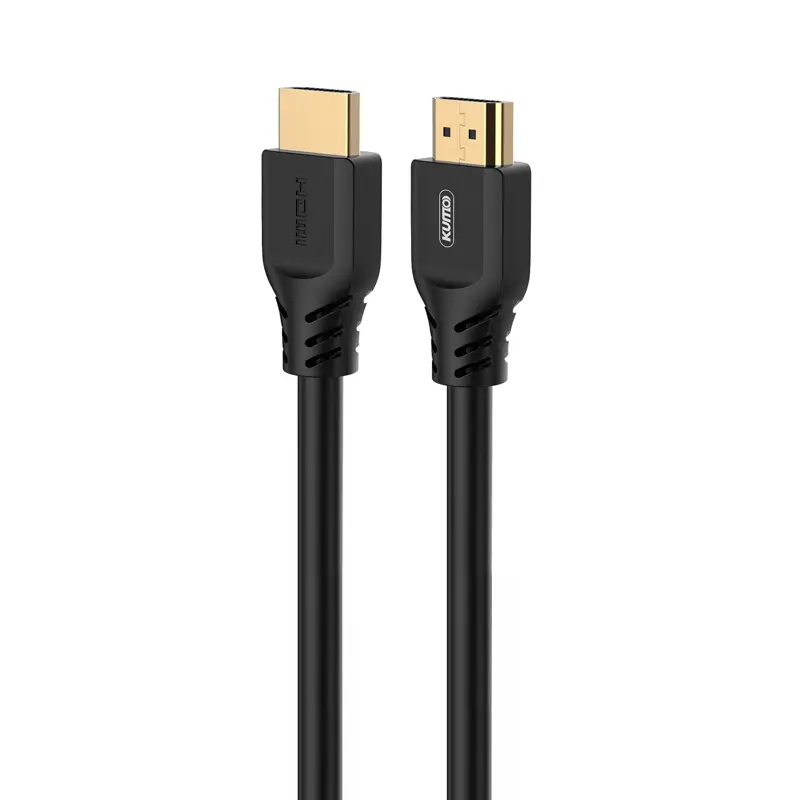 8K HDMI Cable
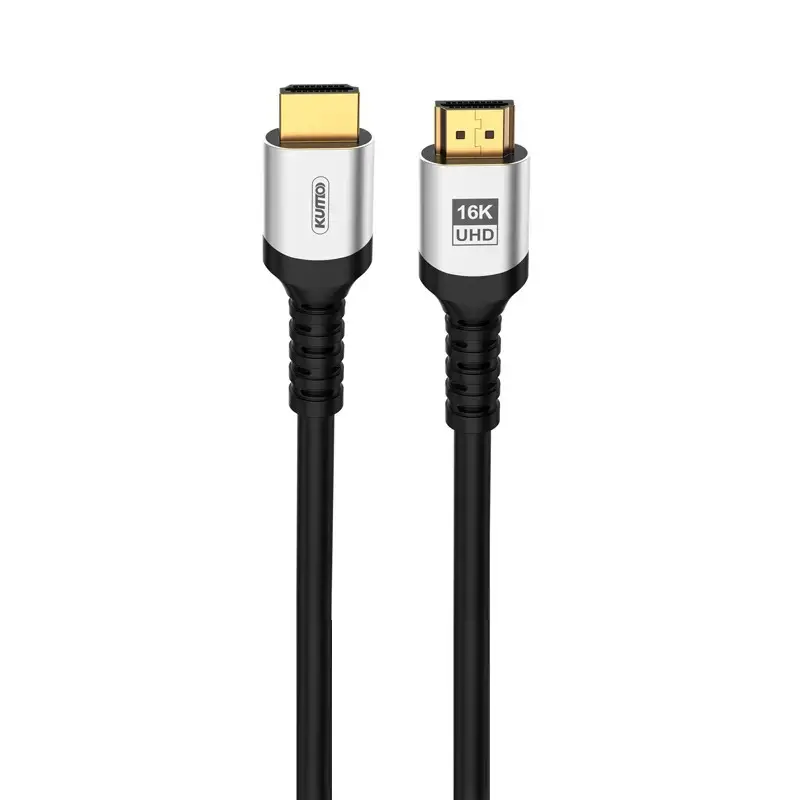 16K HDMI Cable
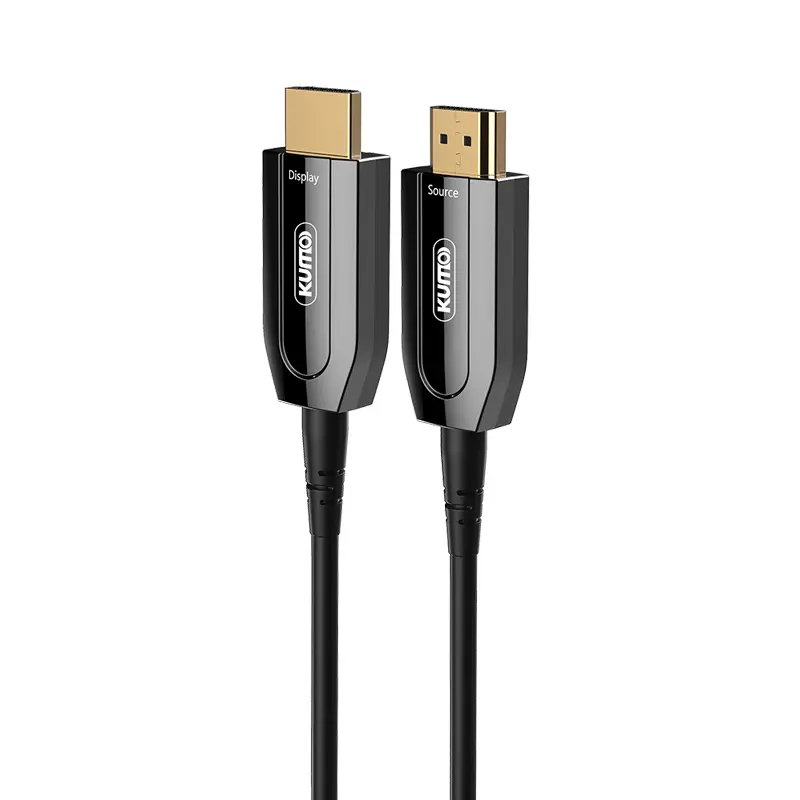 AOC HDMI Cable
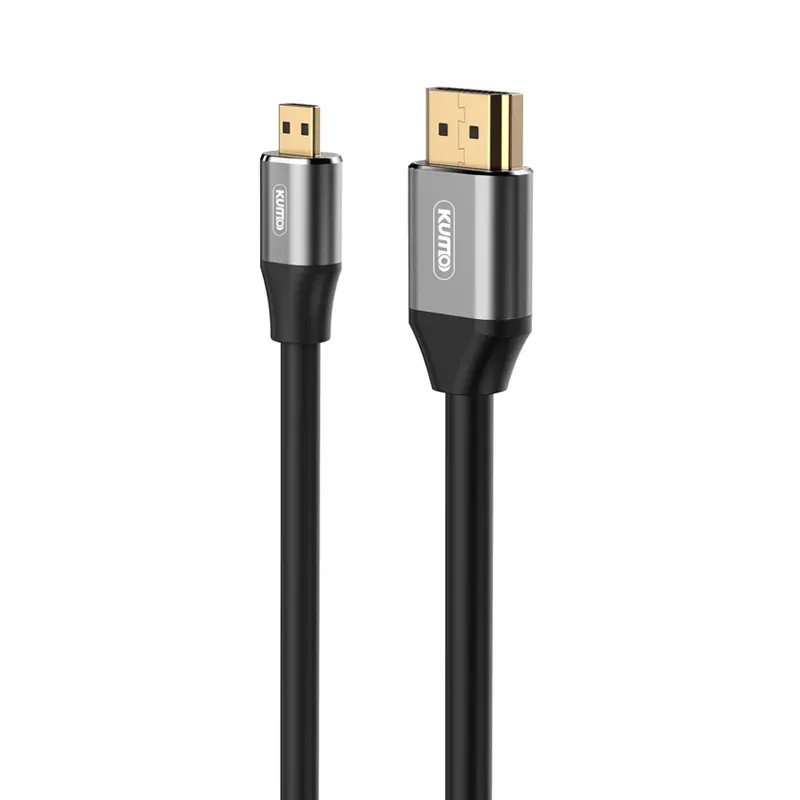 HDMI Conversion Cable
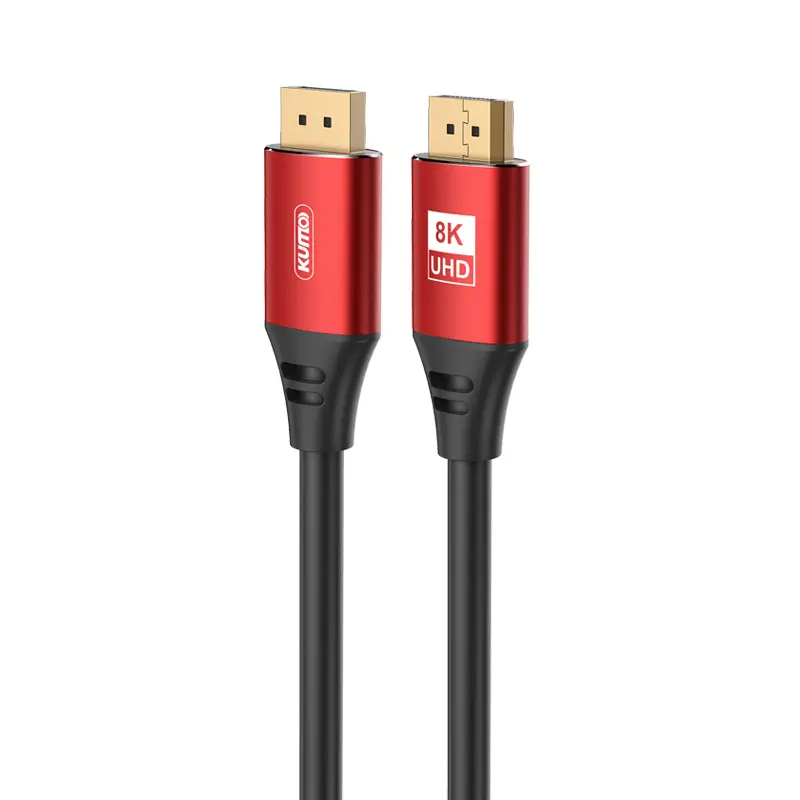 8K DisplayPort Cable
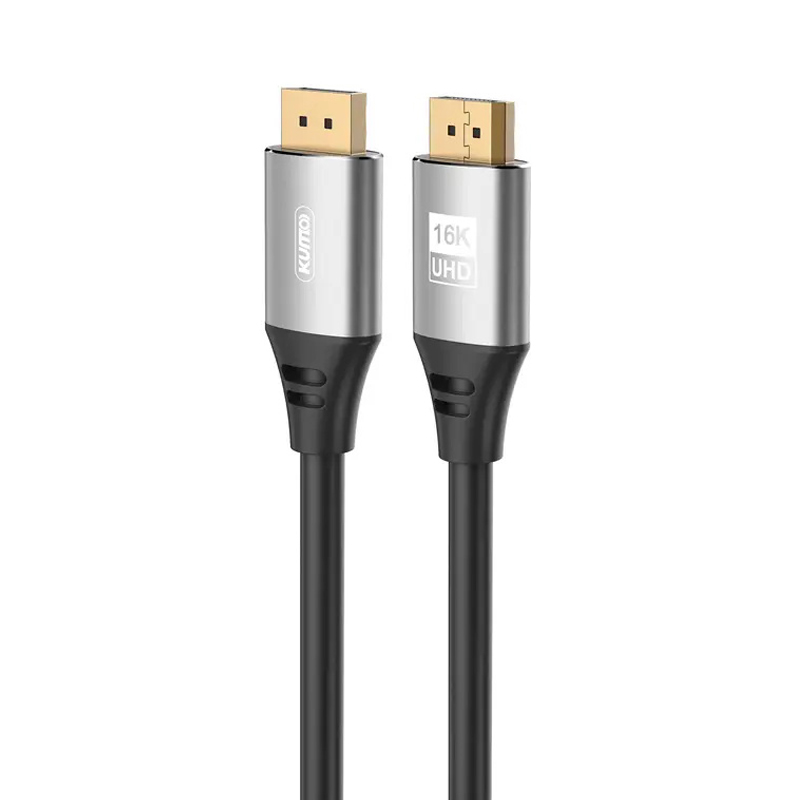 16K DisplayPort Cable
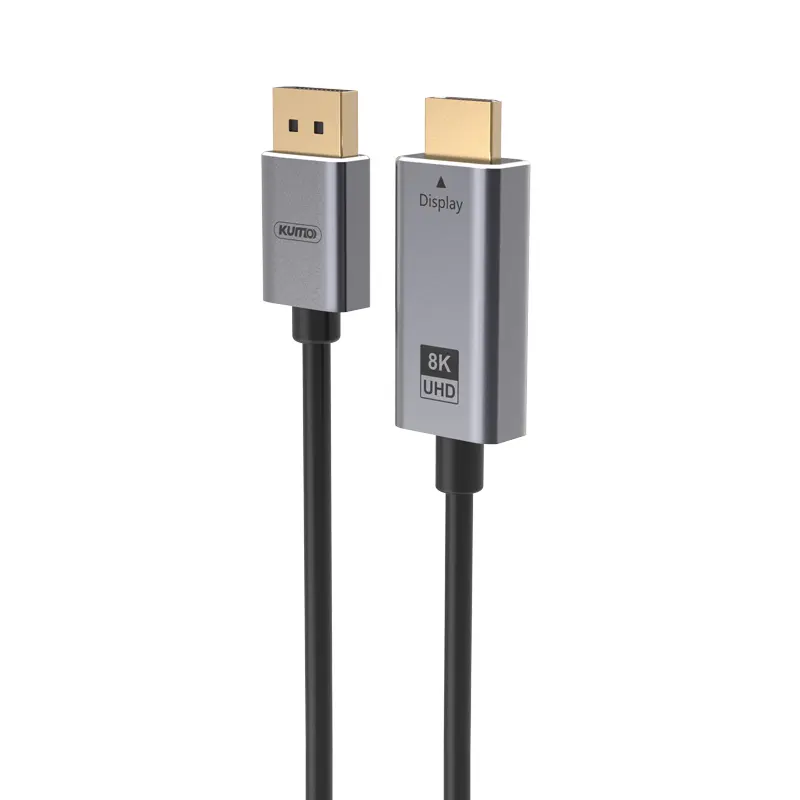 DisplayPort Conversion Cable
 XLR Cable
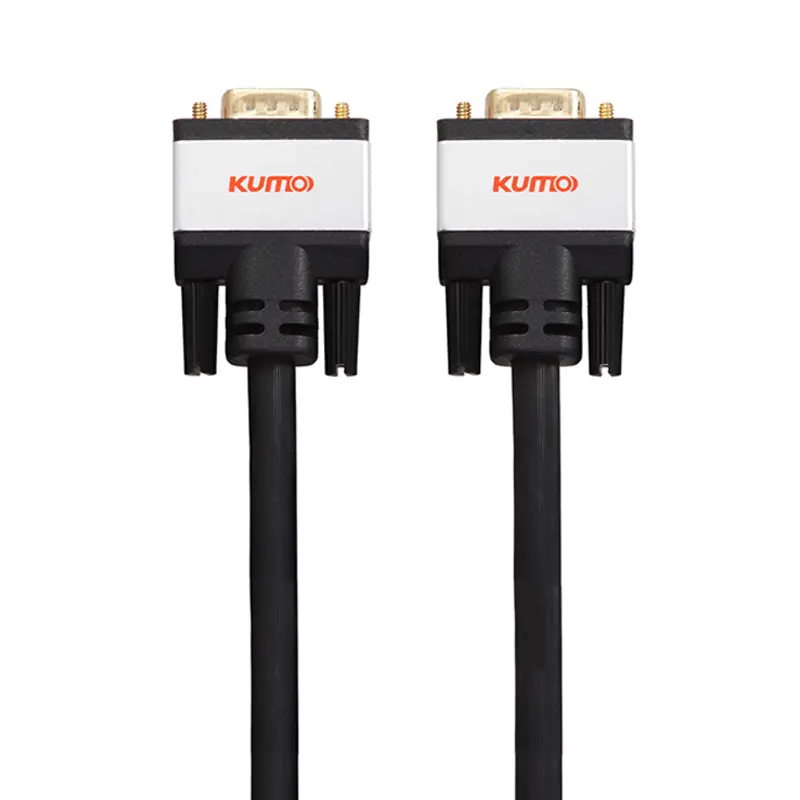 VGA Cable
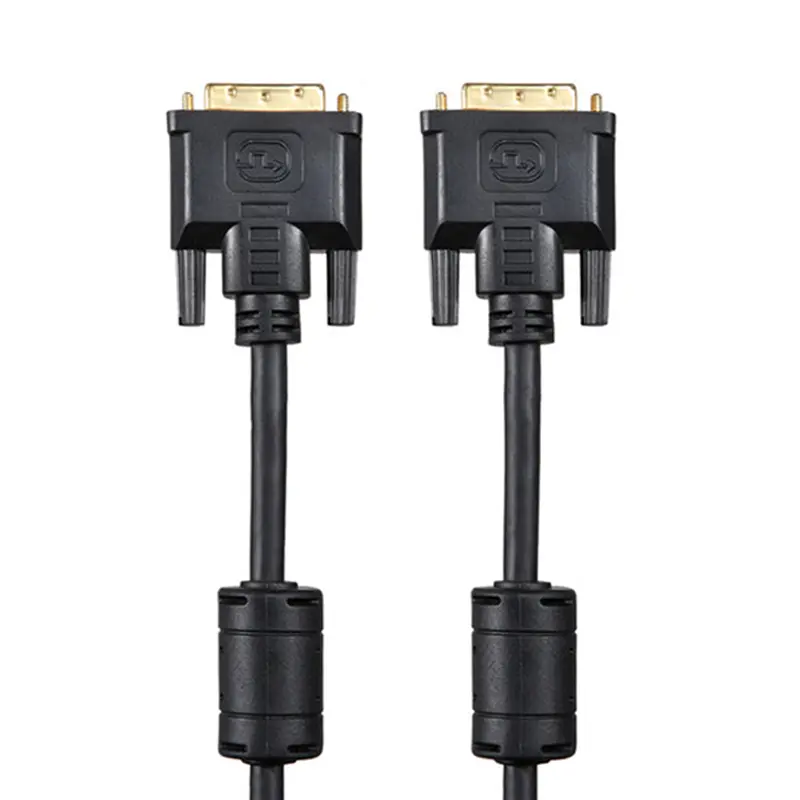 DVI Cable
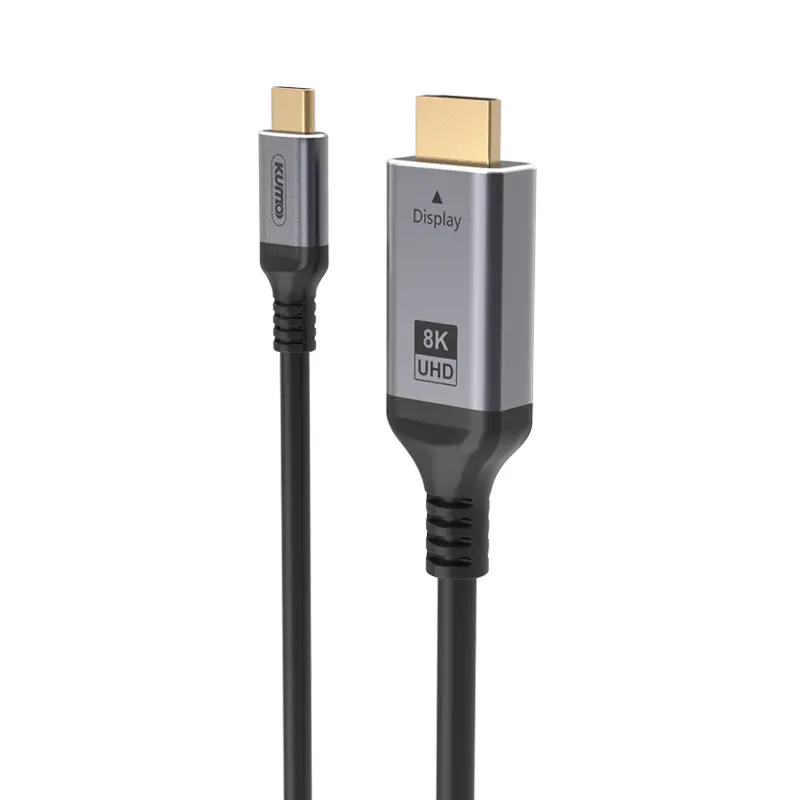 Type C To HDMI
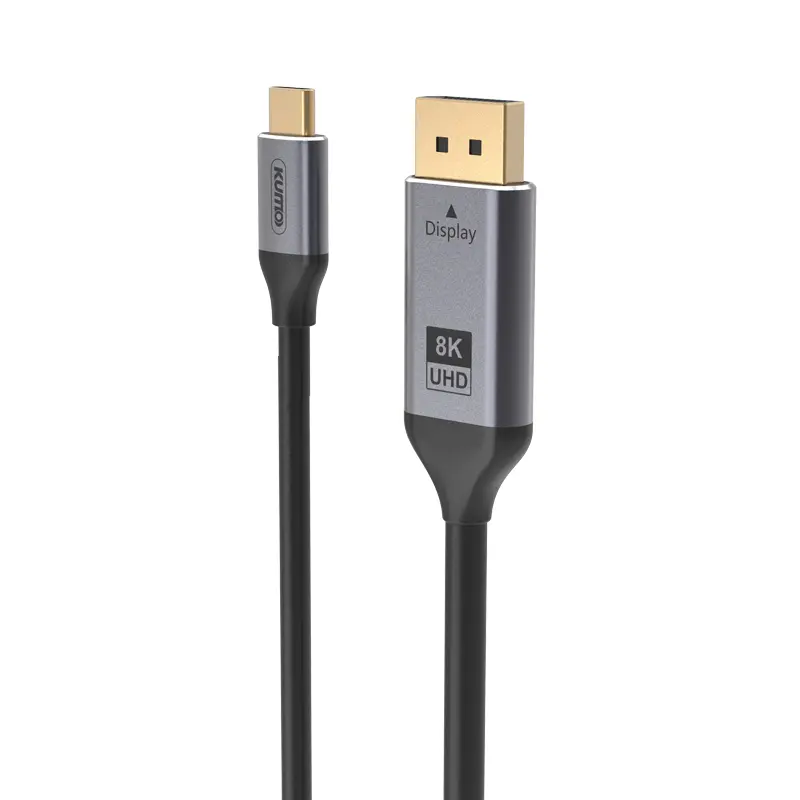 Type C to DP
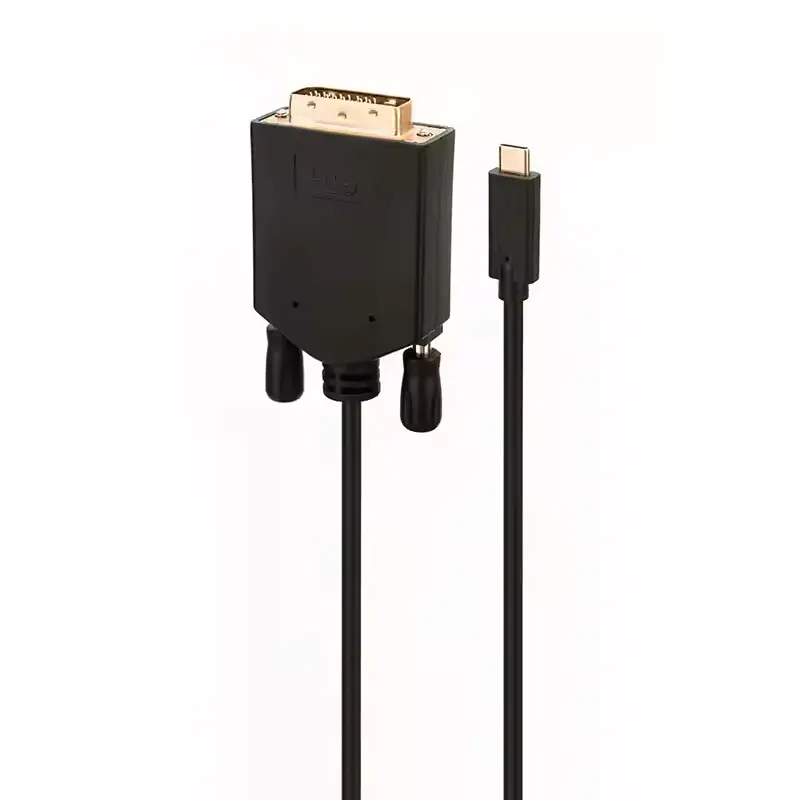 Type C to DVI
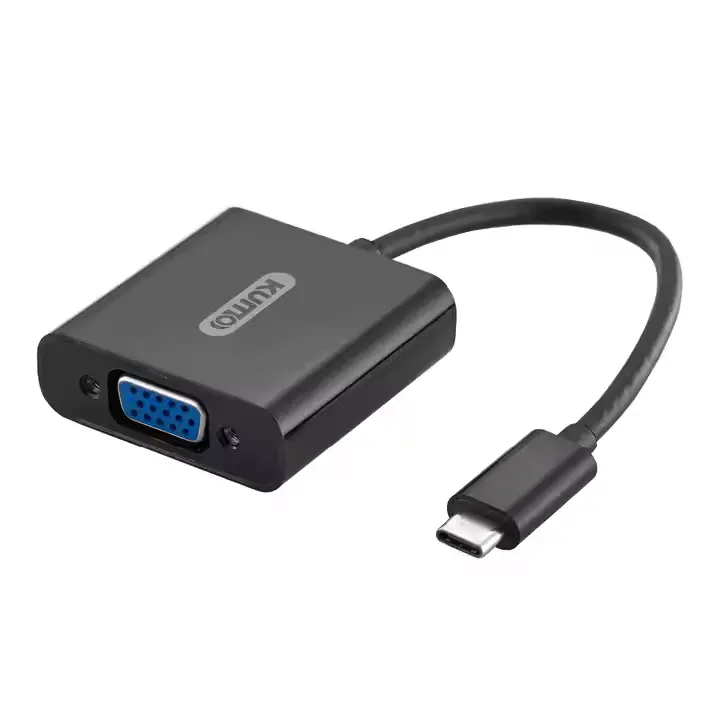 Type C Adapter
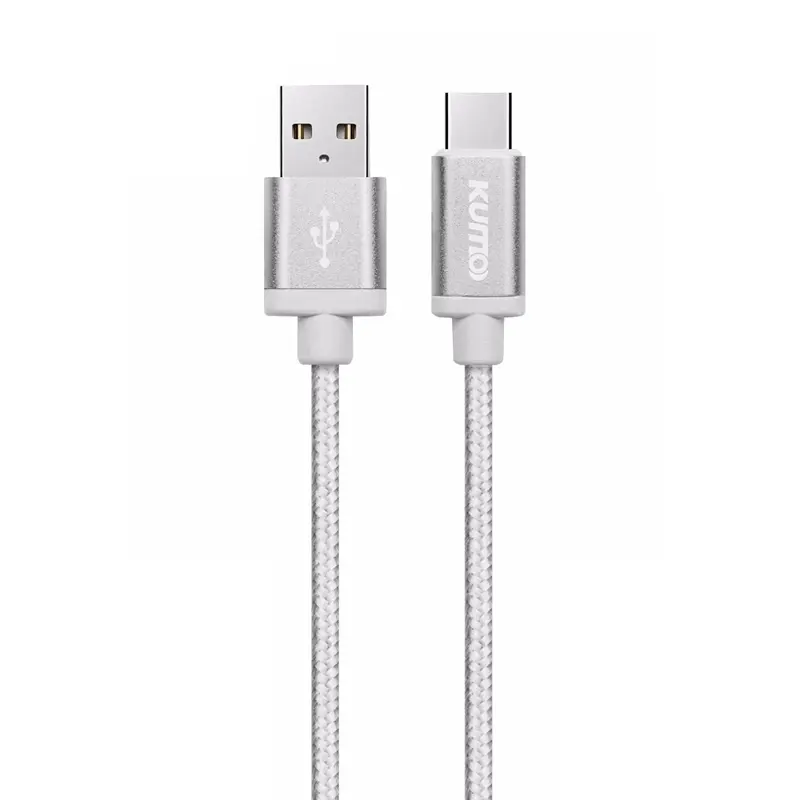 USB A to C Cable
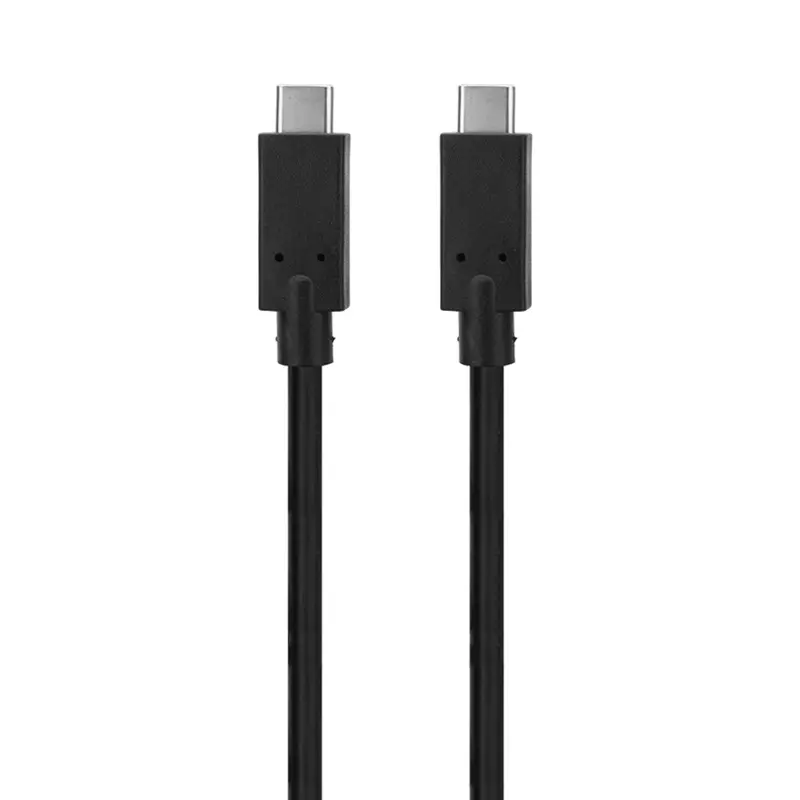 USB C to C Cable
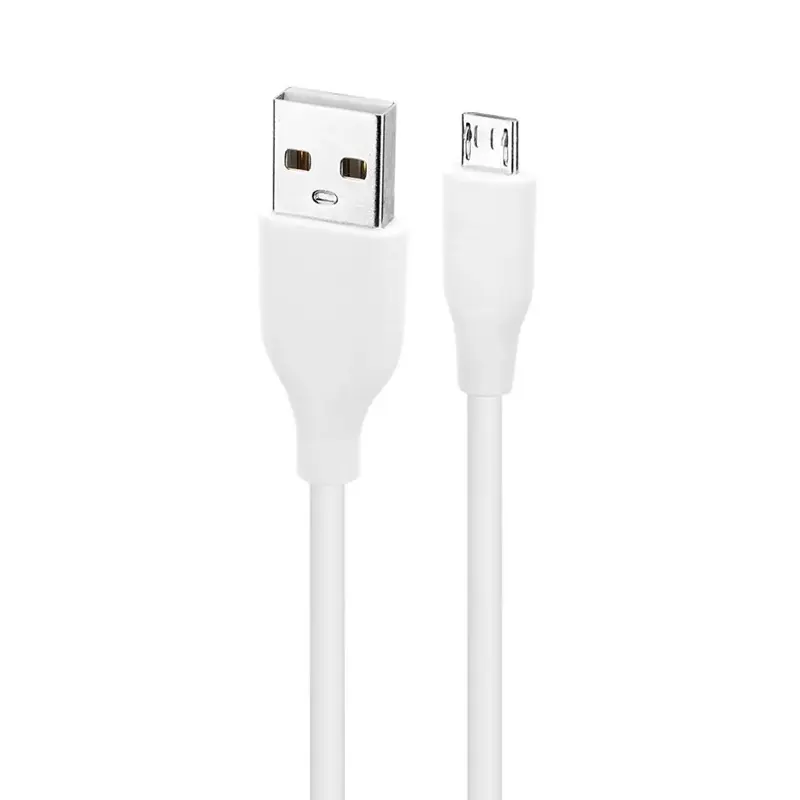 Micro USB Cable
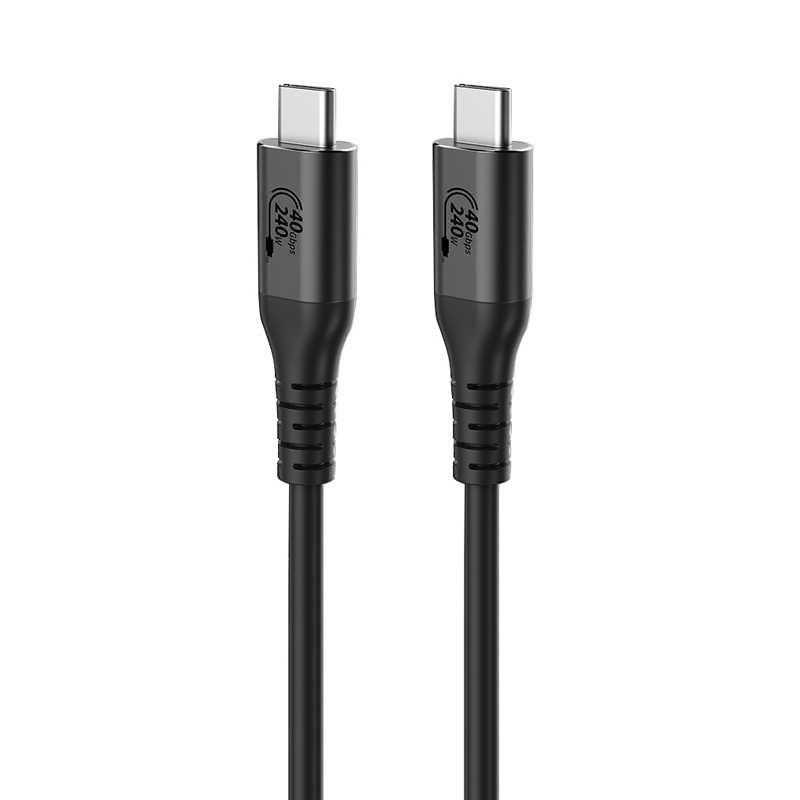 USB4 Cable